The Michelin Guide in France: what the stars mean, and how to use it
You've moved to the country that more or less invented fine dining, and the little red book that ranks it was born here too. But the Michelin Guide is widely misunderstood — treated as a rich person's toy, when in truth it's a free, brilliantly useful map to eating well at every price, from a €35 country bistrot to a once-in-a-lifetime blowout. Here's what the stars (and the Bibs, and the green leaf) actually mean, how the famously secretive ratings work, and — the part that matters most — how an ordinary British household can use it to eat superbly in France without spending a fortune.
The short version
- Stars rate the food on the plate, nothing else. One star is "worth a stop," two "worth a detour," three "worth a special journey" — and décor, service and white tablecloths don't come into it.
- France is the spiritual home. 654 starred restaurants in 2025, including 31 at the three-star summit — among the most of any country on earth.
- You don't need to be rich. The Bib Gourmand flags superb food at a gentle price, and even one-stars often do a weekday lunch menu for €40–90 — the gourmand's open secret.
- The guide is free. The website and app let you filter by stars, Bib or Green Star and book — the single most useful eating-out tool in the country.
Ask a newcomer what a Michelin star means and you'll usually hear "very expensive." Ask a French gourmand and you'll hear something quite different: a trustworthy promise about the cooking, at any price point, backed by the most rigorous restaurant assessment on earth. Learn to read it properly and the little red guide becomes one of the great pleasures — and bargains — of living in France. Let's decode it.
What the Michelin Guide actually is
Strip away the mystique and it's this: an annually published guide to restaurants and hotels — the famous little red book, now also a free website and app — produced, improbably, by a tyre company, and grown over 125 years into the most authoritative verdict on restaurants anywhere in the world. A new edition lands each year for France, the ratings are revised from scratch, and a chef's fortunes can turn on a single morning's announcement.
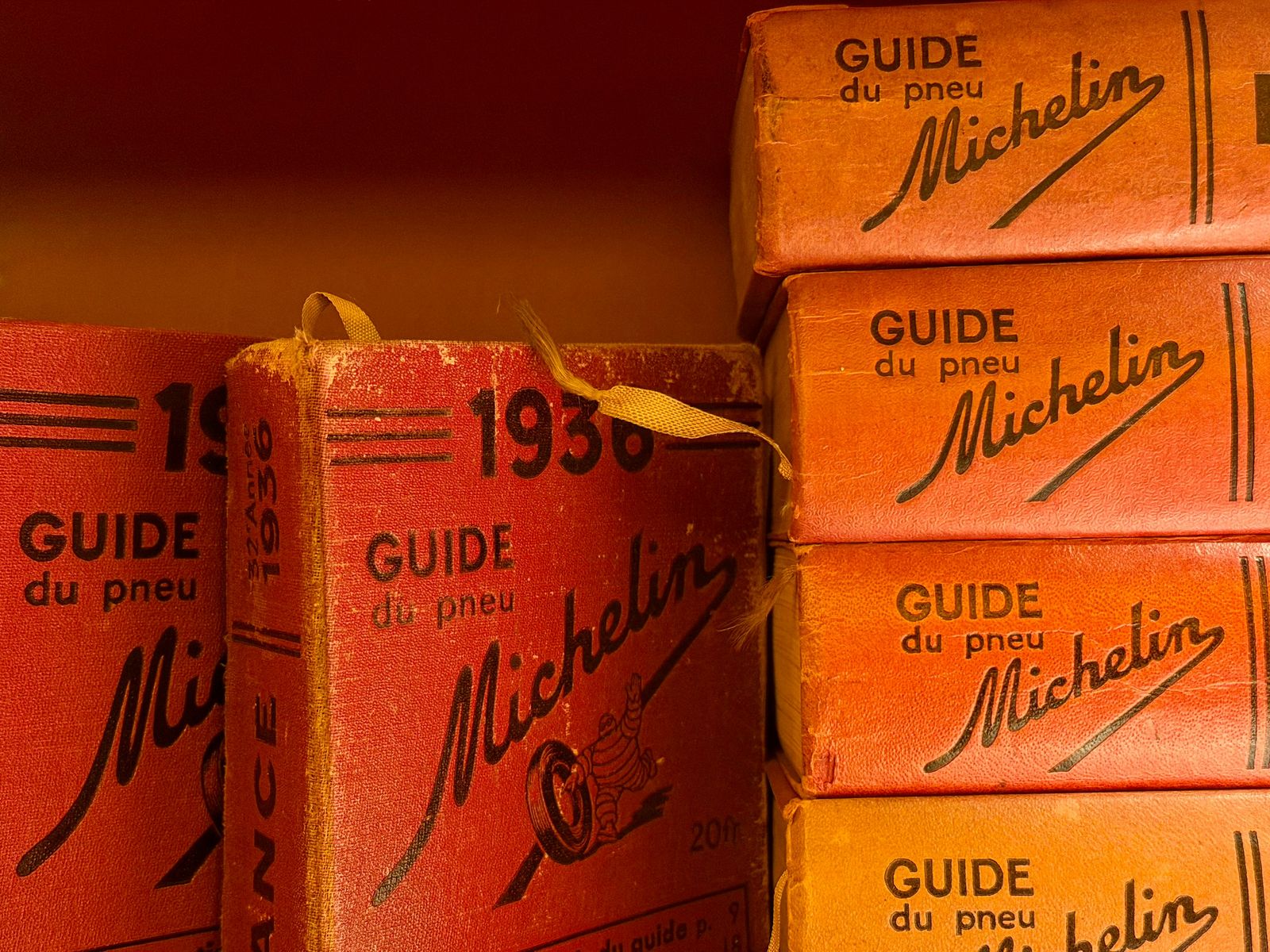
The origin story explains the whole thing. It was dreamt up in 1900 by André and Édouard Michelin — yes, the tyre makers — and handed out free to France's few thousand motorists, at a time when there were barely 3,000 cars in the whole country. That first edition wasn't a foodie bible at all; it was a practical companion for the adventurous driver, packed with road maps, lists of petrol stops, garages and mechanics, tyre-changing instructions and, yes, places to eat and sleep. The logic was gloriously self-interested: give people reasons to drive across France, they'll wear out their tyres, and they'll buy more Michelins.
The turn towards fine dining came, so the story goes, when Édouard found copies of his precious guide being used to prop up a workbench — reasoning that people only value what they pay for, the brothers started charging for it in 1920, dropped the adverts, and leaned into serious restaurant reviews. A single star for good food arrived in 1926; the three-tier scale — a stop, a detour, a special journey — was set in the 1930s, along with the famous team of anonymous inspectors. The guide went global decades later (Tokyo, New York and beyond), but France remains its heartland and its highest standard. And the roly-poly mascot you'll see on it — Bibendum, the Michelin Man, made of tyres — is where the "Bib" in Bib Gourmand comes from. More than a century on, it's the most influential restaurant guide on earth, and it still, quietly, sells tyres.
What the symbols actually mean
The system is smaller and simpler than its mystique suggests. There are really just three star grades, plus three other marks worth knowing — and crucially, the stars judge only what's on the plate: the quality of the ingredients, the skill and the flavour. A grand dining room earns you nothing; a humble room with extraordinary cooking earns three. Here's the whole ladder.
Two things newcomers routinely get wrong. First, a one star is a genuinely big deal — "worth a stop" undersells a kitchen that's among the best in its region; there are only 542 in all of France. Second, the Bib Gourmand is not a consolation prize — it's a separate award for excellent food at a moderate price, and for most of us it's the most useful symbol in the book. The Plate (l'Assiette) simply marks a good, fresh meal, and the Green Star, introduced in 2020, flags kitchens leading on sustainability.
How the stars are awarded
This is the part that gives the guide its authority. Michelin employs anonymous, full-time inspectors who book, dine and pay their bills exactly like ordinary customers — no free meals, no announcements, no telling the restaurant who they are. They visit repeatedly, sometimes over years, and judge on five published criteria: the quality of the ingredients, the mastery of technique, the harmony of flavours, the personality of the chef expressed through the food, and — the hard one — consistency, both across the whole menu and from visit to visit. Stars are reviewed every year, and they can be lost as well as won, which is why chefs treat them with something close to fear. It's not marketing; it's a genuinely earned verdict on the cooking.
The myth of the unaffordable meal
Now the bit that matters most for a normal household, because it's the great misunderstanding. Yes, a three-star tasting menu with wine can run to €300–500 a head and is, frankly, a special-occasion splurge. But that is the very top of a very tall building, and the lower floors are within reach of anyone who plans a little.
The gourmand's secret is the weekday lunch menu. A one-star kitchen that charges serious money at dinner will very often serve a shorter, set menu du midi at lunch for €40–90 — the same hands, the same produce, a fraction of the price. And the Bib Gourmand — nearly 400 of them across France — exists precisely to flag a wonderful meal at a gentle price, often in exactly the family bistrots and country auberges a rural British household lives among. Eating Michelin-recognised food in France isn't a once-a-decade event; done cannily, it's a treat you can afford several times a year.
How to actually use the guide
Start free: the MICHELIN Guide website and app list every starred restaurant, Bib Gourmand and Green Star in the country, with the inspectors' notes, and let you filter by rating, price, location or what's near your route — a lovely way to plan a day out, in the guide's original road-tripping spirit. Book ahead (weeks for a star, months for the three-star temples), go at lunch for value, tell them about allergies or dislikes when you reserve, and don't be shy with the sommelier. A few practicalities worth knowing before you go:
The hackBook early — and know the lunch loophole
Three-star tables open their books weeks, sometimes months, ahead and fill fast; even a good one-star at the weekend wants planning. But here's the trick every French gourmand knows: the weekday lunch menu. The same kitchen that charges €200 at dinner will often serve a shorter set lunch — the menu du midi — for a fraction of it, sometimes €40–90 at a one-star. It's the single best way to eat starred food without remortgaging.
What to expectWhat a starred meal is actually like
Expect an event, not a quick bite: a menu dégustation (tasting menu) of many small, precise courses, often with an optional wine pairing, running two to three hours. There'll be extras you didn't order — an amuse-bouche to start, mignardises with coffee. Smart dress is expected (jacket for men at the top end, no trainers); phones away; and it's absolutely fine to ask the sommelier for help — that's their job, and they're lovely about it.
Best valueBib Gourmand — the everyday sweet spot
If a star feels like a special occasion, the Bib Gourmand is for a brilliant ordinary Tuesday. It flags kitchens serving genuinely excellent food at a moderate price — in France, think a proper three-course meal at a gentle rate. There are nearly 400 of them, often family-run bistrots and country auberges, and for value-for-quality they're arguably the best thing in the whole guide. Filter for them first.
Good mannersCancellations, deposits and no-shows
High-end tables increasingly take a card to hold the booking, and a no-show (or a late cancellation) may be charged — fair enough, given a tasting menu is prepped for you. Cancel in good time if plans change, turn up on time (a tasting menu waits for no one), and if you have allergies or dislikes, tell them when you book, not on the night — a serious kitchen will happily adapt with notice.
Find a starred (or Bib) table near you
The MICHELIN Guide's own website and app are free, and the best way to browse: filter by stars, Bib Gourmand or Green Star, read the inspectors' notes, and see what's near you or on your route. Many listings link straight through to booking, and for everyday tables the app most locals use, TheFork, shows availability and the odd discount too.
Browse the MICHELIN Guide →We're not paid to mention these — they're simply the tools that work. If we ever add a paid affiliate link, we'll always say so plainly.
Which starred or Bib place near me is actually worth it?
A guide tells you where the stars are; a neighbour tells you which one is worth the drive and which to save for a big birthday. The Pimpernel community is where British residents swap the ones they've genuinely loved — the €45 one-star lunch, the country Bib Gourmand nobody's heard of.
Eat like a local gourmand, near you
Pimpernel Life turns the guide into a plan for your patch — the Bib Gourmands and one-star lunch deals within driving distance, scored and mapped, plus the members' picks other readers have actually loved. The pleasure of the Michelin Guide, with the homework done and the good-value routes flagged.
- Bib & star spots near you, mapped
- The affordable-lunch shortlist
- Members' real favourites
Master the everyday table first
Before the stars, it pays to know how the ordinary French meal works — the meal times, the menus, the etiquette and the bill. Our eating-out guide is the full first-timer's briefing.
Read: Eating out in France →Choosing where to live?
Being near great food — a clutch of Bib Gourmands, a market town, a starred lunch worth the drive — is a quiet pleasure of the right location. Our map weighs the things that make daily life good.
Open the Where-to-live map →Straight from the source
The official MICHELIN Guide is free to browse online and in the app — filter for Bib Gourmand to find the best value near you, and look for the weekday lunch menu on any starred restaurant's own site before you assume it's out of reach.
Star counts, awards and prices here reflect the MICHELIN Guide France 2025 selection and are current for 2026, but the guide is revised every year — restaurants gain and lose stars, close, or change their menus and prices — so always confirm the current rating, opening times and cost with the restaurant and the official MICHELIN Guide before you travel or book. This is a friendly explainer, not a restaurant review or a booking service.