
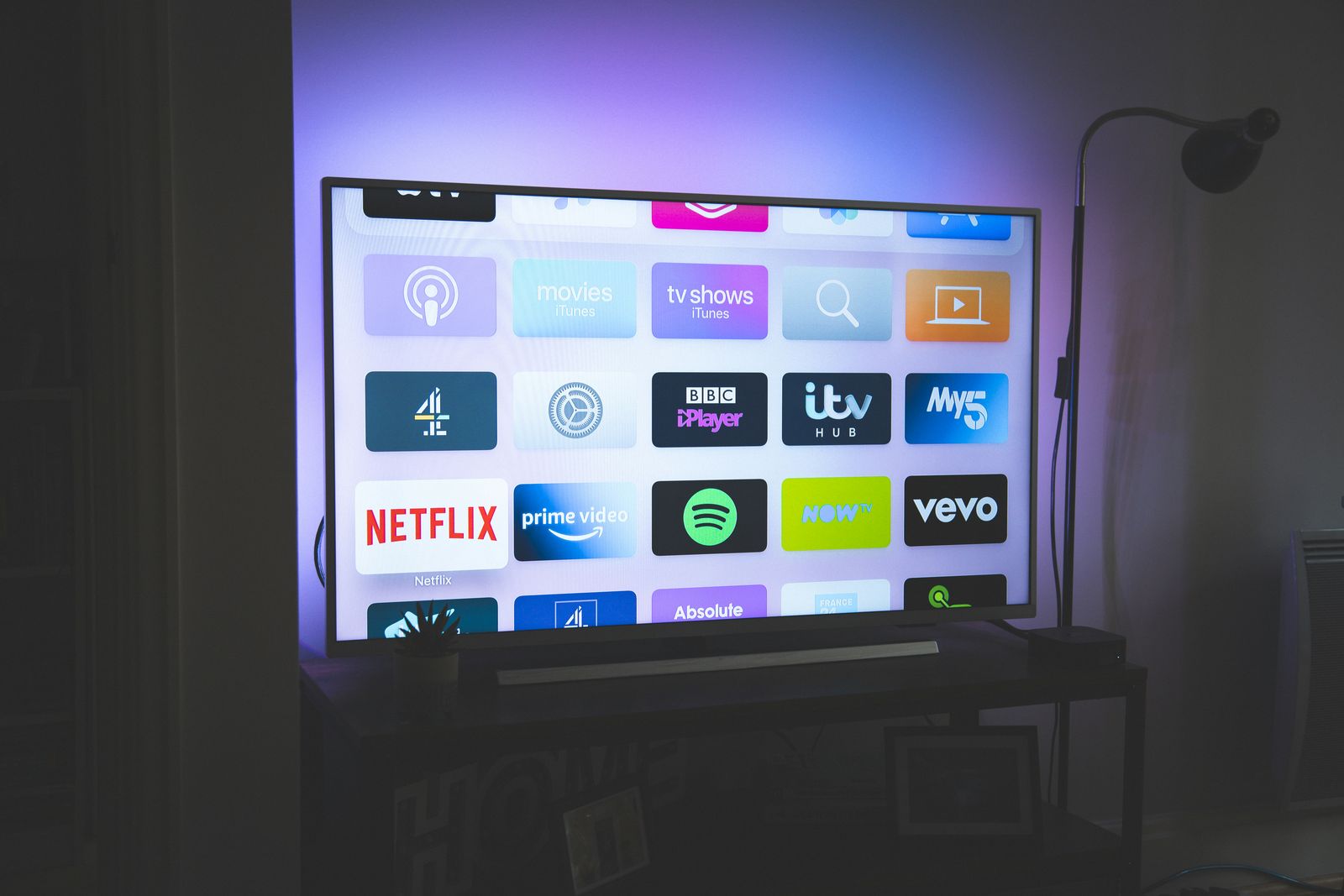
Watching TV in France: UK TV, French channels and the streaming maze
The good news lands first: there's no TV licence in France any more, and a shelf of free French channels comes with any set. The knottier question is how you keep the BBC and ITV going once you've moved — and there are more routes than the expat forums admit, some cleaner than others. Here's the honest map for 2026.
The short version
- There's no TV licence in France. The redevance audiovisuelle was abolished in August 2022. You pay nothing to own a television.
- French free-to-air is generous. TNT gives you 25+ free channels through any recent set or a €20–40 decoder — no subscription.
- Your internet box is the usual answer. Every French broadband box is triple-play: 100–300+ channels bundled in, plus a few English news channels in the base line-up.
- For BBC and ITV, you've three real routes: a satellite dish (free, one-off kit), an English pack on Orange or SFR (a few euros a month), or streaming over your broadband.
- Some UK streaming just works in France — BritBox, and the global services (Netflix, Disney+, Prime, Max) keep their English audio.
- iPlayer, ITVX and Freely are UK-only. They need a paid VPN with UK servers; free VPNs stopped working around 2025.
- The VPN question has a legal grey zone — worth understanding before you rely on it. The IPTV boxes hawked in expat groups are a different, riskier animal.
First, the happy surprise: no more licence fee
Britons arrive braced for the French equivalent of the TV Licence and its threatening letters. There isn't one. France abolished the redevance audiovisuelle — the annual television licence fee — in August 2022. You can own a television, watch it all day, connect it to whatever you like, and pay the state nothing for the privilege. It's one of the quietly pleasant differences of French life, and it changes the maths on everything that follows: there's no licence hanging over any of the choices below.
The free French tier: TNT
Before you subscribe to anything, know that France gives away a solid slab of television for nothing. TNT — Télévision Numérique Terrestre, the digital terrestrial network — carries more than twenty-five free channels: TF1, France 2, France 3, M6, Arte, the news channels like BFM TV, and a clutch of others. No subscription, no account, no fee.
All you need is a television with a built-in tuner — almost any set sold since 2012 has one — or an external TNT decoder from any electronics shop for €20–40. It won't give you the BBC, and it won't give you the depth of a full box package, but as a first-day stopgap while you sort broadband, or as a permanent backup, it's genuinely useful and completely free.
The usual answer: your internet box
Most households end up watching through their broadband box, because every French internet subscription is triple-play: internet, landline and television bundled into one contract. Orange, SFR, Free and Bouygues Telecom all hand you a TV decoder at no extra cost, carrying anywhere from 100 to 300-plus channels depending on the plan, with catch-up (replay) built in.
Useful for newcomers: the base package on most boxes already includes a few English-language news channels — BBC World News, CNN International, Sky News, sometimes Bloomberg — at no extra cost. That won't scratch the itch for EastEnders or the football, but it means you're never entirely cut off from English-language TV the day you plug in. Our guide to getting connected covers choosing the box itself; here we're concerned with what you can watch once it's live.
Keeping the BBC and ITV: the three honest routes
This is the question that actually brings Britons to a guide like this. UK channels aren't in your French box's main line-up, so if you want the BBC, ITV, Channel 4 and Channel 5, you choose between three routes — and the right one depends on what you want and what kit you'll tolerate. The diagram below lays out the fork; the detail follows underneath.
Route one — a satellite dish. This is the old faithful, and still the most reliable way to get live BBC and ITV. Free-to-air UK channels — BBC One, ITV, Channel 4 and more — broadcast on the Astra satellite at 28.2°E, which reaches much of France. Point a dish at it, plug in a Freesat receiver, and you get the real channels, live, with no monthly subscription and no VPN. The cost is one-off: the dish, the box, and getting it aligned. The catch is the satellite's footprint has shrunk over the years, so reception weakens the further south and east you go, and in the deep south-west you may need a larger dish — worth checking locally before you commit.
Route two — an English pack on your box. The lowest-effort option. Orange sells a Bouquet Anglophone for around €5/month adding a handful of English channels; SFR's Bouquet Anglais is about €5.99/month for roughly eight. Free and Bouygues don't offer a dedicated paid English pack, though their base line-ups carry the usual English news channels. It's cheap and it's already inside a contract you have — just be clear-eyed that these packs are mostly news and lifestyle, not the full BBC and ITV entertainment schedule.
Route three — streaming over your broadband. The modern answer, and where most of the confusion lives, so it gets its own section.
Streaming: what works, and what needs a workaround
There's a clean line running through UK streaming in France, and once you see it the maze straightens out. Some services work directly. Some are locked to the UK and need a VPN.
Works directly, no fuss: BritBox streams a large BBC and ITV archive straight to France with no VPN at all — for a lot of British households it's the tidiest single answer, a paid subscription that just plays. And the global services you may already pay for — Netflix, Disney+, Prime Video, Max — all operate in France and keep their original English audio and subtitles; you simply get the French catalogue rather than the UK one, which differs title by title but is rarely a dealbreaker.
Locked to the UK: BBC iPlayer, ITVX and Channel 4 are geo-restricted the moment you leave Britain — and so is Freely, the UK's newer free streaming-TV app that bundles BBC, ITV, Channel 4 and Channel 5 in one place (note: Freely-over-broadband via a dedicated receiver is a different, France-friendly product; the phone/tablet app is the UK-locked one). To reach the geo-locked services from France you need a paid VPN with UK servers. This matters: iPlayer tightened its VPN detection sharply around 2025, and the free VPNs that once worked now largely don't. The names that still tend to get through are the paid ones — NordVPN, Surfshark, ExpressVPN, CyberGhost — often set up at router level so every device in the house is covered.
What nobody tells you
The iPlayer legal position is genuinely murky
Here's the honest picture, because the forums oversimplify it. A UK TV Licence is technically required to use iPlayer "wherever you are" — yet the BBC's own guidance also states you can't stream iPlayer abroad at all, so you'd need a licence to do something they say isn't possible. VPNs themselves are legal, and the UK government has confirmed it has no plans to ban them. Crucially, TV Licensing has no power to enforce outside the UK, and there's no recorded case of anyone being prosecuted for watching iPlayer abroad. None of that makes it squarely permitted — it's a grey zone, not a green light. We're laying out the facts rather than telling you what to do; the tidy, unambiguous streaming route remains BritBox plus the global services.
A word on the IPTV boxes
Sooner or later, in a local expat group, someone will offer you a cheap set-top box that promises "everything" — every UK channel, every sport, hundreds of others, for a small monthly fee. These are IPTV boxes, and they are a different and riskier animal from everything above. The old satellite installers who used to serve "Sky in Spain" have largely pivoted to selling them.
The content is very often pirated, which is why it's so cheap and so comprehensive. Enforcement across France, Spain and Portugal has focused on the operators rather than individual viewers — the big sports-rights holders in particular have been aggressive about getting the services blocked — so the practical risk to a household is less about a knock on the door and more that these boxes are unreliable, disappear overnight when a service is shut down, and quietly fund something you'd probably rather not. We'd steer you to the legitimate routes above. They cost a little more and they keep working.
The practical playbook
- Day one, plug in a TNT decoder or use your set's tuner for free French channels while you arrange broadband. No licence, no fee, nothing to sign.
- Get a triple-play box — you'll want the broadband anyway, and the TV and English news channels come bundled.
- For live BBC and ITV, decide dish vs. broadband. A satellite dish is the most reliable long-term answer; a Freely-over-broadband receiver avoids the dish if your signal's fine and you'd rather not drill a wall.
- For box-sets and catch-up, start with BritBox plus whatever global streamers you already have — that covers most households without a single workaround.
- Only reach for a VPN if you specifically need live iPlayer or ITVX, use a paid one, and go in understanding the grey area above.
- Give the cheap IPTV box a miss. It's the one route that tends to end in a dead screen and a shrug.
Still sorting your broadband?
None of the streaming routes work without a solid connection — and in rural France, what's available at your address varies enormously. Our guide to getting connected covers fibre, 4G boxes and Starlink, with the rural south-west realities spelled out.
Read the connectivity guide →One useful email, every fortnight
Pimpernel is the honest, practical companion to British life in France — the guides, the tools and the calendar that keep the admin from catching you out. Get the fortnightly email for the next pieces, the rule changes that actually affect you, and the things nobody tells you until it's too late.
Get the fortnightly email →This guide offers practical, general information, not legal advice. Broadcasting rights, streaming availability, VPN terms and the legal position on accessing UK services from abroad change, and can be interpreted differently depending on your circumstances. Pimpernel does not endorse accessing geo-restricted services in breach of their terms; we set out the facts so you can decide for yourself. Always check the current terms of any service and the licensing position before relying on it.